
Sailing lessons Lake Lanier: What Captain John teaches beginners
Twenty years out of Aqualand Marina, Dock Q, and the question every first-time student asks me on the dock is the same: "Captain John, how long before I can actually steer this thing?" Most people booking sailing lessons Lake Lanier offers expect a classroom; what they get is a tiller in hand inside the first hour, with Browns Bridge to the south and a steady afternoon southwesterly filling the main. Here is exactly what we cover, what it costs, and what to bring.
What sailing lessons Lake Lanier teach beginners on day one
Day one covers four skills and nothing more: how to rig the boat, how to leave the dock under power, how to set sails and hold a course, and how to come back to Dock Q without bumping the neighbor's hull. Three hours, mostly on the water, and you steer most of it yourself.
My approach after twenty years on the lake is simple. I do not lecture for an hour before we cast off. Beginner sailing lessons Lake Lanier students get from me are built around the idea that you learn to sail by sailing, not by drawing diagrams of wind vectors at a whiteboard. The American Sailing Association's basic keelboat curriculum (ASA 101 syllabus) covers the same core skills my first-day students walk away with, though our format is shorter and one-on-one rather than a weekend classroom.
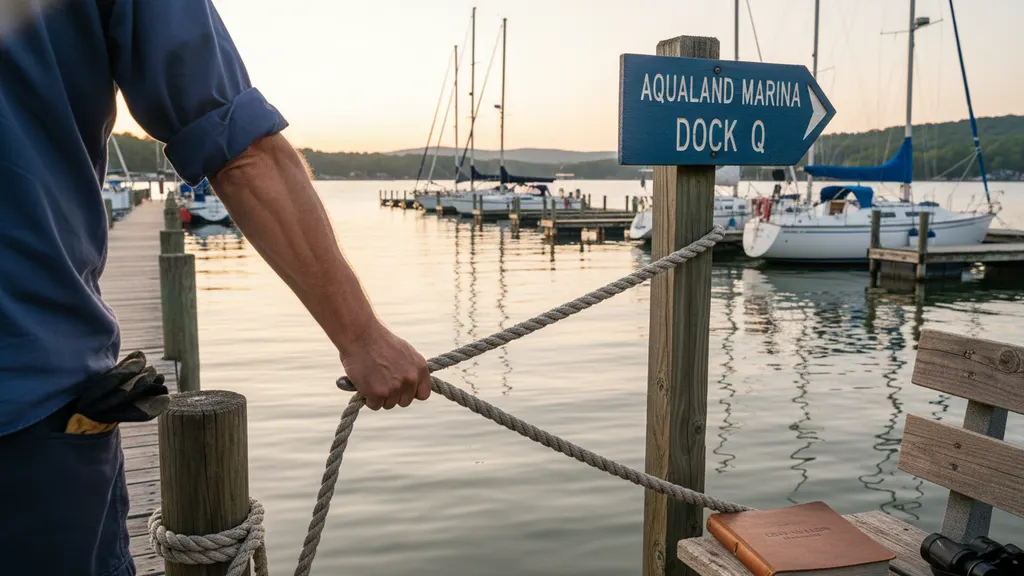
We start at Dock Q with the boat still in the slip. You rig the mainsail with me coaching, not watching me do it. Then we motor out past the Aqualand fuel dock into open water, kill the engine, and you put the boat on its first close reach. By the second tack, most students are steering on their own with my hand off the tiller. Read our summer sailing guide for a longer view of what the lake feels like by season.
There is a full breakdown of this topic in Sailboat proposal on Lake Lanier: a step-by-step guide for 2026.
We cover the details separately in Sailing Day Trip from Atlanta: Your Lake Lanier 40-Minute Guide.
For a closer look at this, see Lake Lanier sunset cruise: Atlanta's favorite anniversary tradition.
We cover the details separately in What to bring on a sailing charter: your Lake Lanier gear list.
For a closer look at this, see Lake Lanier Sailing Charter for Families: What to Know Before Booking.
For a closer look at this, see Corporate team building Lake Lanier: a leadership offsite case study.
For a closer look at this, see Beginner sailing lessons on Lake Lanier: what you need to know.
There is a full breakdown of this topic in Lake Lanier Sailing Charter Length: Half-Day vs Full-Day Guide.
There is a full breakdown of this topic in Atlanta to Lake Lanier: Planning a Sailing Day Trip Up I-985.
There is a full breakdown of this topic in Engagement Photo Shoot on a Lake Lanier Sailboat: What to Plan.
We cover the details separately in Your first time on a sailboat what to expect: a Lake Lanier guide.
For a closer look at this, see Sailboat Proposal on Lake Lanier: How Couples Plan the Big Moment.
There is a full breakdown of this topic in Birthday sailing Lake Lanier: how to book the best private sail.
Where we sail from: Aqualand Marina, Dock Q
Aqualand Marina sits on the south end of Lake Lanier just off I-985 in Flowery Branch, Georgia, about 45 minutes north of downtown Atlanta. The lake itself is managed by the U.S. Army Corps of Engineers as a flood-control and water-supply reservoir, with 692 miles of shoreline when held at full pool of 1,071 feet.
The Corps publishes the current pool elevation daily on its Lanier project page, which matters more than you would think. When the lake is two feet below summer pool, several beginner-friendly anchorages off Two Mile Creek open up that disappear at full pool. I plan first-lesson routes around the current reading. Most students booking sailing lessons Lake Lanier start with their first session out of this exact dock, then move to longer half-day charters out of the same slip.
Dock Q faces southwest, which is the same direction the prevailing summer breeze comes from. That means rigging the sails is easy, the wind fills them as you raise them, and you can practically sail off the dock if the wind cooperates. I do not let beginners do this on day one, but it gives you a feel for why this corner of the marina is the right teaching base. New to the area? Our Aqualand Marina guide covers parking, fuel, and the on-site cafe.
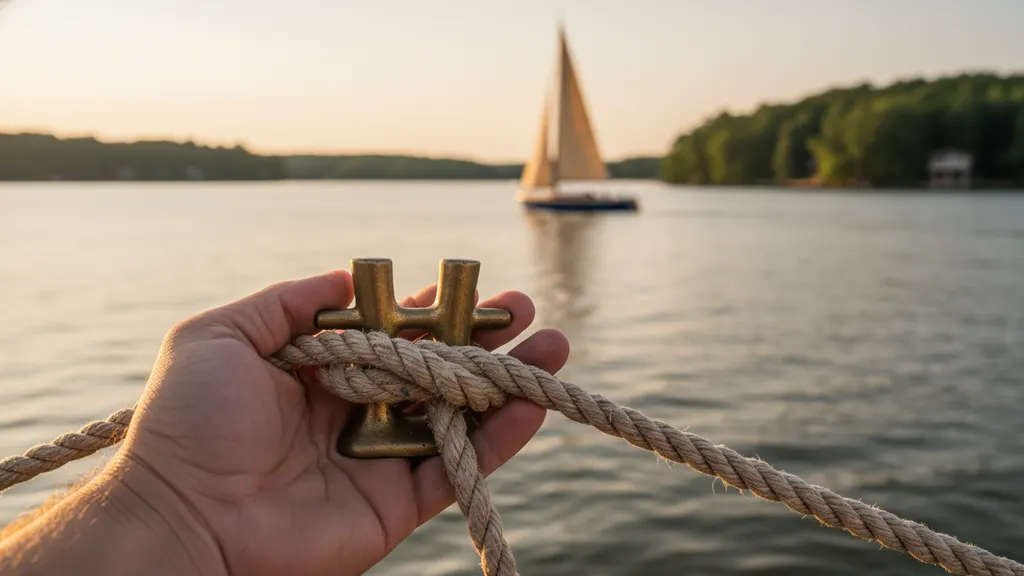
Sailing lessons Lake Lanier: reading wind around Browns Bridge
Browns Bridge crosses the lake at mile marker 13 and creates a wind shadow on its lee side that surprises every new sailor. The bridge piers also accelerate water flow, which can shift the boat sideways even on a calm day. We sail near it on every first lesson so you learn the lake's quirks early.
On a summer afternoon, the wind on Lanier is rarely steady. The NOAA Atlanta forecast office at weather.gov/ffc shows that the metro area runs a typical 6 to 10 knot south-southwesterly thermal pattern from May through September, building in the early afternoon and dying around sunset. Around Browns Bridge, those numbers can drop to 2 knots in the lee and spike to 15 in the gusts on the exposed side.
Reading the water is half of sailing. I teach students to look for cat's-paws, the dark ripples on the surface that show where wind is hitting the water. From the deck of our sloop, you can see a 12-knot gust coming 30 seconds before it arrives if you know what to look for. That is why sailing lessons Lake Lanier students remember Browns Bridge more than any other part of the first day. Our wind patterns deep-dive tracks the seasonal swings hour by hour.
Boat handling skills covered in sailing lessons Lake Lanier
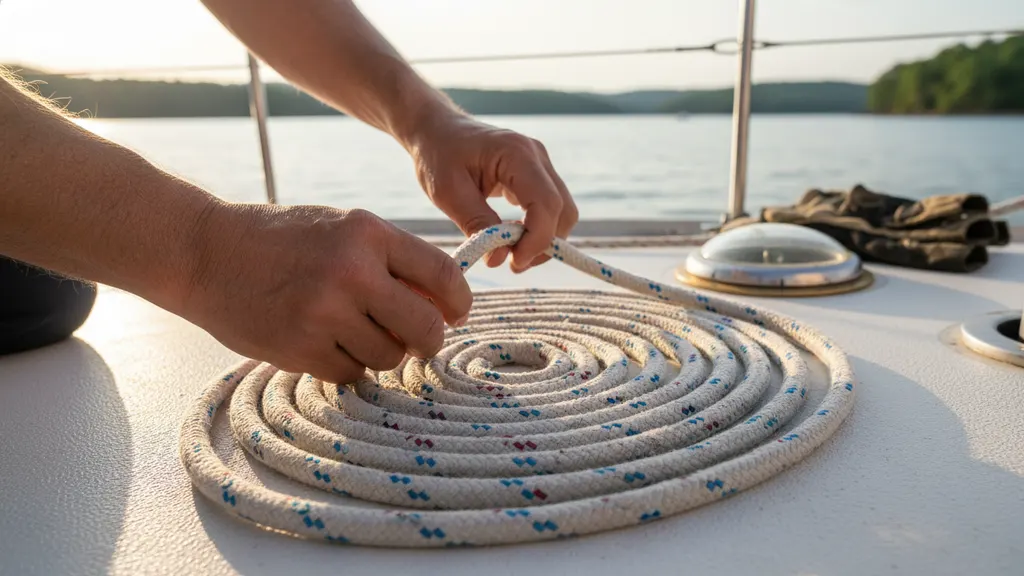
Every beginner leaves with three working skills: tacking through the wind without stalling, jibing without slamming the boom, and docking under power back at Dock Q. The boat is a 28-foot sloop with a simple rig and no fuss. You hold the tiller, I call the trim, and we run the drills again and again.
Tacking sounds easy on paper. In practice, a 28-foot sloop loses speed the moment the bow crosses the wind, and if you do not steer through fast enough she will park herself head-to-wind and refuse to fall off on the new tack. We do six clean tacks before we move on to anything else. After twenty years teaching sailing lessons Lake Lanier visitors come back for, I have noticed almost everyone overcorrects on the first three and then settles in.
Jibing is the dangerous maneuver. When the wind comes around the stern, the boom swings hard across the cockpit, and a careless jibe can knock someone overboard or break gear. We do controlled jibes only, with the mainsheet hand-pulled in tight before the turn, and we never let the boom slam. That single drill keeps everyone safe.
| Lesson type | Length | Best for | Price |
|---|---|---|---|
| Private beginner | 3 hours | Total newcomers | $325 |
| Sunset coaching sail | 2 hours | Couples, first taste | $275 |
| Half-day refresher | 4 hours | Returning sailors | $425 |
| Full-day private | 7 hours | Charter prep | $695 |
For a closer look at this, see Bachelorette party boat Lake Lanier: how to plan the perfect sail.
We cover the details separately in Birthday boat party Lake Lanier: book the full boat for 14 guests.
For a closer look at this, see Lake Lanier Sailing Routes: What You See From Captain John's Boat.
Safety, gear, and what to bring on your first sail
What you bring is short: closed-toe shoes with a non-marking sole, a hat, sunscreen, a refillable water bottle, and a windbreaker if the forecast calls for one. I supply the life jacket, the boat, the instruction, and the coffee.
The U.S. Coast Guard Auxiliary's Boating Safety reference lists life jackets as the single biggest factor in survivable boating incidents, and on my boat every student wears one from the moment they step aboard. Georgia state boating regulations published by the Georgia Department of Natural Resources require a Type I, II, III or V personal flotation device for every person on board, and Lake Lanier patrol officers do enforce it. The safety briefing before sailing lessons Lake Lanier students step aboard takes ten minutes and we run it the same way every time.
I run a sober-boating policy on every charter. The Lake Lanier Association tracks safety statistics annually at lakelanierassociation.org, and alcohol involvement remains the number-one factor in serious incidents on this lake. No drinks on board until the boat is back in the slip. That rule has not bothered a single student in twenty years.
Pricing, scheduling, and booking your first lesson
Private beginner sessions run $325 for 3 hours, payable when you reserve. I run two timeslots most days from April through October: 9 a.m. and 2 p.m. The afternoon slot catches the better thermal wind, but the morning slot is glassier and less crowded on the lake.
Scheduling on Lanier is weather-dependent. If the NOAA forecast at weather.gov calls for thunderstorms within two hours of your reservation, I will call you the night before to reschedule. There is no charge for weather cancellations. I do not run lessons in winds over 18 knots sustained or below 4 knots; the first is unsafe for a beginner, the second is not actually sailing. Most sailing lessons Lake Lanier students book three to four weeks ahead in peak season, sooner for holiday weekends.
Atlanta-area visitors planning a sailing weekend on Lanier can find more on the lake's recreation amenities at exploregeorgia.org and the City of Flowery Branch's tourism page at flowerybranchga.org. Aqualand Marina is roughly 6 miles from downtown Flowery Branch and 12 miles from Gainesville, so most students stay locally and drive in.
For repeat students, I run a 4-session beginner package at $1,150 that I keep telling people I should raise the price on. Once you have done four lessons you can handle the boat in 14 knots solo, which is more than most owners on Lanier can claim.
Frequently asked questions
How long does it take to learn to sail on Lake Lanier?
Most students reach basic single-handed competence after four 3-hour private sessions, which is roughly 12 hours on the water with me. That is enough to tack, jibe, dock, reef the main, and handle the boat solo in winds up to 14 knots. To match the American Sailing Association's ASA 101 basic keelboat standard, plan on closer to 16 hours plus the written exam. Day-charter passengers without any prior experience tend to be steering on their own within the first hour, which is the part most people find surprising on a first sail.
What is the best time of year for sailing lessons Lake Lanier offers?
May through early October gives you the steadiest wind, with afternoon thermals running 8 to 13 knots and water temperatures warm enough that a swim off the boat is welcome rather than punishing. April and late October are quieter on the lake and cooler on deck, which some students prefer for calmer conditions. November through March is doable in warm clothing but the wind pattern shifts to northerly cold fronts that gust hard. Per NOAA Atlanta station data at weather.gov/ffc, June averages the most reliable steady breeze.
Do I need any sailing experience before booking a first lesson?
No experience required at all. Sailing lessons Lake Lanier first-timers book with me are intentionally one-on-one so I can read your comfort level and pace the day around it. About a third of my students have never been on any sailboat. Another third have been crew on someone else's boat but never held the tiller. The last third are returning to sailing after years away and want a refresher. If you are nervous about the water, the U.S. Coast Guard Auxiliary publishes a beginner's safety primer at uscgboating.org worth a read the night before.
What happens if the weather is bad on my scheduled day?
I check the NOAA forecast at weather.gov every evening for the next day's slots. If thunderstorms are forecast within two hours of your reservation window, I call or text you the night before and we reschedule to the next mutually open date, no charge. Lake Lanier squalls build fast in summer afternoons, and U.S. Army Corps of Engineers lake reports show consistent thunderstorm activity in July and August. If conditions look marginal on the morning of the lesson, I make the call by 11 a.m. for the afternoon slot.
We cover the details separately in Wednesday group sail Lake Lanier: the $79 per-seat format explained.
For a closer look at this, see Lake Lanier pirate cruise kids: plan the perfect family sail.
For a closer look at this, see Best time to sail Lake Lanier: a month-by-month captain's guide.